


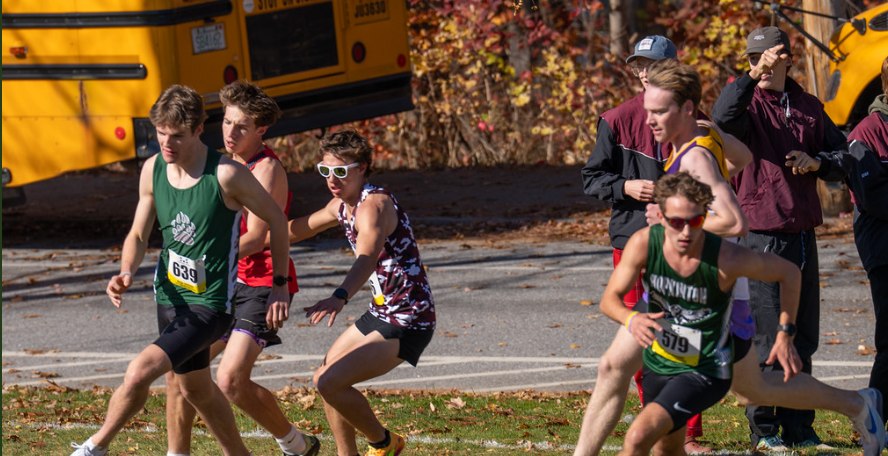
I wince at writing the title of this article and even considered not writing it. But truth be told I feel compelled to do so after commentating on the divisional championships and seeing what I saw. Or maybe more accurately what I didn’t see. And that was participation, particularly in the girls D3 race.
I wrote about this in the preseason preview, recognizing a trend over the last few years of declining numbers of athletes along with a declining number of schools able to bring a scoring team to the line. For anyone reading this please do not think I am angry or upset with any particular program, coach or school representative, or the NHIAA or any other body associated with the sport of cross country. However I am concerned with this downward trend in the sport I love.

And it’s not just on the girls side, nor totally contained to Division 3. Among Division 1 schools, four girls and two boys squads, Central, Spaulding, Timberlane and Salem for girls, Central and Timberlane for boys, which schools did not have five individuals in order to score as a team. Not to mention Central and Timberlane have a strong history in the sport. In D2, Milford was the only school not able to run a full team on either the boys or girls side.
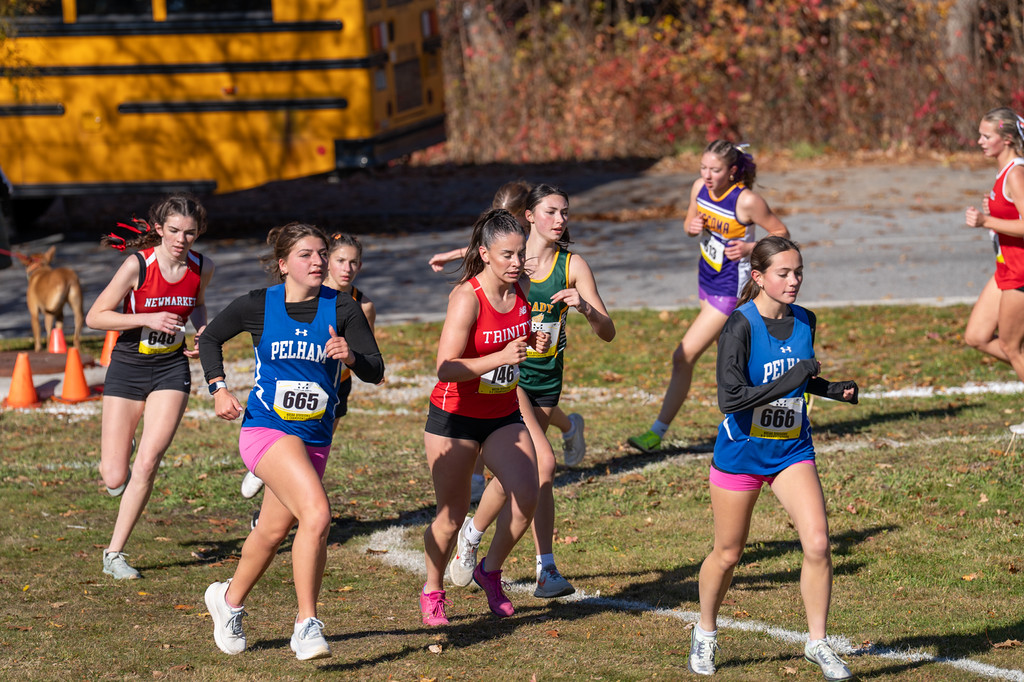
But due to lower enrollment numbers Division 3 looks a lot uglier. For the girls only 13 schools hosted enough girls to score out of 30 schools at the meet. That means 17 schools had participants but not enough for a team. On the boys side, better but certainly not great, 19 schools had enough athletes to score as a team out of 33 schools, meaning 15 schools had representation at the meet, but not enough to score as a team. I had a colleague interject that in general we are seeing lower school enrollment in general across the board, which would obviously have a greater impact on those smaller schools that make up Division 3.
And it doesn’t end there. A little deeper digging, on the girls side, again 30 schools represented, three teams, only ten percent of participating schools put a full varsity team on the line. There were four teams with six athletes, meaning there were six teams that only had five runners. So almost half of the teams that finished with scoring runners were only one person away from not being able to score as a team.

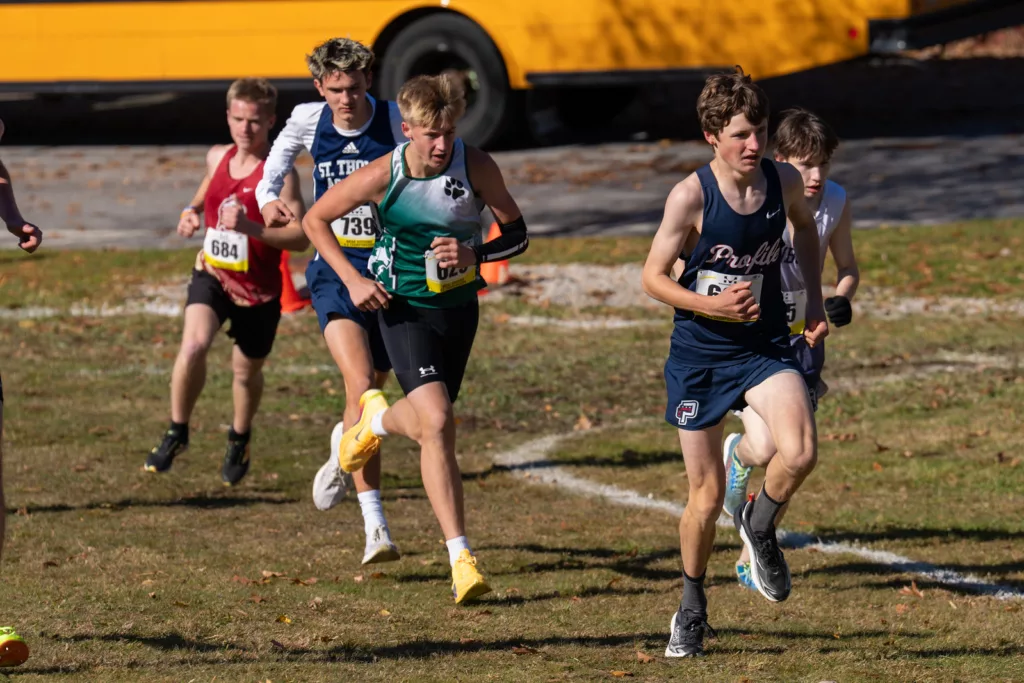
On the boys side it was better, fourteen teams with seven runners, then two with six and two with five. But the trend is growing across both genders. Last year 16 teams contended for the title on the girls side. This year 13. For boys last year it was 24 schools with this year being 18.
If this was a type of contagious illness, we’d call this a pandemic. Last year the D3 girls race supported 134 athletes and this year just 113. For boys the story is the same, 184 last year, 163 this year. That’s a drop of just about 9% and trending the wrong way. It’s hard to say if we are seeing something similar across the other divisions, with a bigger pool of students and most of those teams with plenty of athletes to cover a seven person roster, even if they were seeing lower participation numbers we might not be able to perceive it due to having enough athletes to cover their bases. So I guess who should be concerned and what can we do?
I think the answer to the first question is everyone. While certain programs are thriving, even Division 3 programs like Hopkinton, the general drawdown is not good for the sport in general. Right now we have some special things going on in the state, especially on the girls side, that is only enhanced with a robust interest in the sport. In a sport that is often overshadowed by more societally appreciated sports, we cannot lose ground across the athletic spectrum and expect to have a thriving sport. As funding for everything, and especially schools in this climate, less money across athletics means the “less successful” programs will be on the chopping block. And that could mean that if you do not have a scoring team in cross country, you no longer have cross country.
But aside from the current status of funding and athletics in general, we need to work on the fact that less athletes participated in the divisional championships this past Saturday than in previous ones. Toss out the covid year and this is somewhat unprecedented. I mean we have more schools in D3 and less participation. It would be interesting if someone looked at the trends across the other divisions but that’s not going to be me.
Instead I’m going to make some assumptions that what we see in D3 is happening in other divisions, maybe just at a lower scale. Which means what can be done and how can we do it. And for that I think we need to drill down into why we see this drop off? I mean I had one conversation on Saturday that cross country should be thriving at the D3 level, as it’s both cheap in relation to other sports, along with it can accept essentially unlimited athletes on the roster. Also take into consideration that it only takes five for a scoring team, smaller schools certainly can get in on the action and work towards being competitive. But that’s certainly not what’s happening. Quite the opposite.

Which brings us back to why. It would be interesting to see how many programs have coaches that are in the building, able to recruit the appropriate kids to the program. We all know it’s only partially about practice, but more that the athletes forge a connection with their coaches about a lot more than simply workouts and racing. Having that person in the school is key and we’ve seen it at Mascenic for sure since I retired from the classroom. While maybe not entirely critical, you cannot deny it’s easier to get kids to come out for the sport.
Also without an advocate for the sport in the building, the sport often gets marginalized by the other sports with regard to acceptance. Here’s where I’d expect to get some push back, if I thought anyone not already interested in cross country happened to read this blog. While I feel I could make a good case about it being marginalized intentionally, I think it’s safe to say that societally cross country and running get at least backburnered, if not bullied, by visibility. As I’m writing this, I would have no problem finding specifics about the ball games that will be broadcast live across the nation but damned if I can get good information about the NYC marathon while it’s being run.

So let’s accept that none of this is intentional, and it’s simply an oversight that the sport is marginalized, if that’s happening at the Athletics level, meaning within the schools that are competing, growing programs is going to be an uphill battle. Over the years I’ve had many different ADs, but we were successful, not just competitively but in getting people to join the team because I was an unrelenting presence and defender of the sport in the school. I’m not going to say that any of the ADs were directly against our sport, but in most cases they didn’t understand the sport they had purview over while being intimately understanding of those other ball sports that grace the cover of Sports Illustrated. And because either they didn’t understand it, or simply could care less for it, I had to do more than our other athletic programs to support the athletes than simply showing up for the season or holding some open gyms.
This is not to say that ADs are specifically to blame. However with some of these positions being part-time, it’s not surprising there are places within athletics that have that appearance as well. Not to mention when working with small budgets, and all kids need to run is a singlet and matching shorts, it’s easy to scrimp on cross country. And if that becomes the norm, you certainly aren’t going to see a lot of steam building up behind your cross country program.
In another conversation over the weekend about the state of D3 cross country, another colleague mentioned that maybe we should host a coaches round table at a future coaches clinic and hear from the successful programs about what they do and how are they supported within the sport. While I don’t think that’s a bad idea, I question whether it will land on the ears of the appropriate people. As of now, my AD has not reached out to me about the November clinic, nor my head coach, and that’s where most coaches get their rules review. I can recall year after year, certain schools not attending, often not even knowing the clinic exists. I am registered for this one, but only because I’ll be hosting a workshop at it.
And I think this sort of mis-communication happens all the time. So many times when I host a home meet I get questions upon arrival about coarse walks, start times, results, etc. that have all been addressed in the meet information letter that gets sent out to ADs and coaches I have emails for. When I ask if they saw the info letter they often say they never got. So I think one of the things that needs to happen is our D3 ADs need some training on what the sport really is and how they can best support it.

Well, my cramping fingers and sore neck are telling me I’ve beaten a dead horse enough. I wish I had the answer on how to reverse this trend and see the sport I love grow and thrive. As a practitioner as a youth, along with the 25 years I’ve seen what it can give to athletes, I’m hoping we are hitting a low point and the pendulum starts back on an ascending arc. But I’m going to keep poking at this problem and hopefully we can figure out our next steps.
Best of luck to everyone racing on Saturday.
I’ll see you out there.